Buying property is more than just finding the right location and comparing prices. Every land parcel has a formal identity in government records and for many urban properties in Maharashtra that identity is the CTS number. In this guide, Omshakthy Homes explains what the CTS number is, where to find it and why it is important to verify before making a purchase.
What Is a CTS Number in Property Records?
The cts number meaning is a unique reference assigned to a land parcel through the city-survey system in notified urban areas. It helps the land-records department identify the exact property represented in official records.
The commonly used cts number full form is City Survey Number, although some property references expand CTS as City Title Survey or Chain and Triangulation Survey. Since terminology can differ across sources and locations, buyers should rely on the exact number shown in official records and registered documents.
In simple terms, a CTS number works like an identification code for an urban plot. It helps distinguish one parcel from another, even where nearby sites have similar postal addresses.
Must Read: Possession Certificate: Meaning, Types, Importance & Process
A Simple CTS Number Example
Consider a plot described as "CTS No. 245/3, Village A, Taluka B." Here, the number identifies the specific city-survey parcel connected to that property.
This cts number example also shows why an address alone is not enough for verification. A building name, street name, or landmark may change over time, but the official land-record reference is intended to connect the property with its survey details.
The cts no of property should be checked against the property card, registered sale deed, approved layout documents, and other relevant records. A mismatch may indicate an entry error, a boundary issue, or that the documents relate to different parcels.
CTS Number in Property Card: What It Tells You
The cts number in the property card is generally shown as the key identifier for an urban land parcel. The property card, also called a Malmatta Patrak in Maharashtra, is maintained for properties within city-survey limits.
A property card can assist a buyer to review information such as recorded holder, area, assessment related information and property reference. It is an important check record, but it is not a substitute for a full legal title review.
Before signing an agreement, compare the CTS reference across these documents:
- Registered sale deed or agreement for sale
- Property card
- Index II, where applicable
- Approved building or layout plan
- Tax records and society documents, where relevant
If there is any inconsistency, pause the transaction and seek clarification from the seller, the City Survey Office, and a qualified property lawyer.
Must Read: Tripartite Agreement: Meaning, Example & How It Works in Home Loans and Real Estate
CTS Survey Number and Survey Number: Are They the Same?
The Acts survey number is generally used for land in an urban city-survey jurisdiction. Rather, survey number or gate number is used in case of rural/agricultural land records.
It is an important distinction because depending on where the property is and what category it falls into, the way to search and the backing records might be different. An urban plot can be traced through a CTS reference whereas a rural parcel can be traced through a survey or gate number.
Do not assume that a CTS number and a survey number are always interchangeable. Look at the revenue record of the land in question. Note the exact language used.
Is a CTS Number Available in 7/12 Extract?
The cts number in 7/12 can be followed in some land records where the urban and revenue references are linked. But the 7/12 extract is more associated with rural and agricultural land records while the property card is the primary record for city-survey properties.
Services for viewing 7/12 extracts and property cards are available on the Maharashtra land-records portal. Instead of one record for all types of land, buyers have to choose the document relevant to the property's jurisdiction.
For a plot purchase, it is wise to examine the land classification, survey reference, ownership entries, mutation history, encumbrance status, layout approval, and physical boundaries along with the CTS details.
Must Read: Immovable Property: Meaning, Types, Examples, Rights and Legal Differences
How to Find CTS Number Online
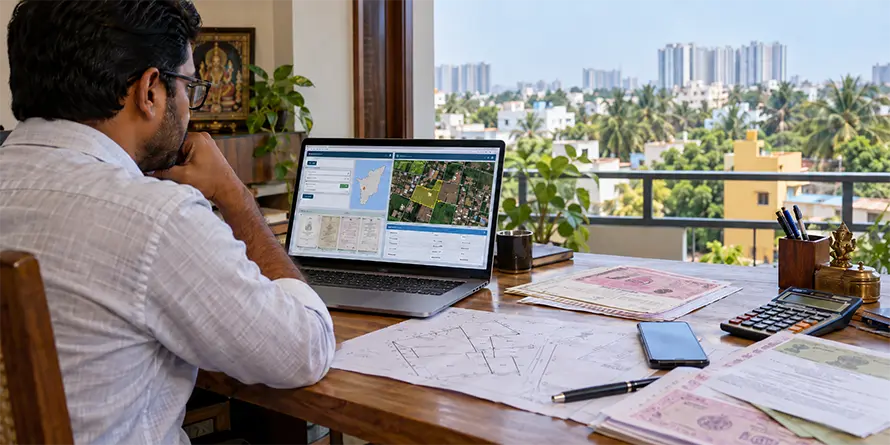
Buyers who want to find cts number online can begin with the official Maharashtra Bhumi Abhilekh land-records portal. The portal offers services to view land records and download property-card information for applicable locations.
Follow these broad steps:
- Visit Maharashtra Bhumi Abhilekh website.
- Select the relevant service like Property Card or 7/12 record.
- Select division, district, taluka, village or city-survey office details.
- Please provide such property information as property reference or owner information available on the portal.
- View the record carefully before using and downloading a displayed record for verification.
The available search fields may vary by region and record type. Use the official portal rather than depending only on third-party listings or screenshots.
How to Check CTS No Online Safely
When searching for a cts no online, start with the information already available in the sale deed, prior agreement, property-tax document, or old property card. This reduces the risk of selecting a similarly named village or an incorrect land parcel.
Correlate the number to the document schedule on the registered deed after viewing the record. Also compare location description, area and recorded holder. A pretty CTS number does not assure a clear title or even that the seller is the legal owner of the property.
If you're making a big transaction, have your lawyer look at it. Digital land records are useful for initial due diligence but a lawyer can check the chain of title, encumbrance certificates, mutations, approvals and any issues that may affect ownership.
Must Read: How to Apply for CMDA Approval Online: Documents, Fees & Step-by-Step Process
Why CTS Verification Matters Before Buying Land
Property verification is especially important when comparing plots in Chennai or evaluating emerging residential locations. Although CTS records are chiefly associated with Maharashtra's city-survey system, the broader lesson applies everywhere: confirm the official land identifier and verify the document trail before paying a token amount.
Also, when looking for plots in Guduvanchery, the same cautious approach is helpful. Buyers should check the survey details, parent documents, approvals, access and land-use status through the relevant Tamil Nadu authorities.
If you are looking for plots in Avadi Chennai, ensure that the layout has the required approval and verify that the plot reference in the deed matches the approved layout plan.
Plots available in Maraimalai Nagar need to check the revenue records approval status, road access and any conditions that may affect the construction or resale.
Similarly, the buyers searching for plots in Poonamallee should verify the exact plot number, survey reference, boundary measurements and approval details before proceeding.
A CTS number is not merely a technical entry. It is one of the starting points for connecting a property on the ground with its official identity in government records.